.webp)








The Botanical Blueprint: A Masterclass in High-Efficiency Strategy for Garden Tower Defense
Roblox: Garden Tower Defense (GTD) stands out in the crowded tower defense genre by substituting generic military units with a vibrant, albeit deadly, ecosystem of flora. While the aesthetic is charming, the underlying mathematics of the game are punishingly precise. Success in GTD isn't about placing the strongest plant you own; it is about managing the Photosynthesis Economy and understanding the Inter-Plant Synergies that dictate your defensive throughput. This guide explores the deep-level execution required to transition from a casual gardener to a Master Arborist, focusing on the rigorous "How-To" of wave management and economic scaling.
1. How to Establish the Primary Economic Root System

The most common failure in Garden Tower Defense is Over-Planting defensive units too early. To succeed, you must learn how to prioritize your economic units—the Sunflowers—above all else during the first five waves. The "How-To" here is a matter of calculated greed. You should aim to have at least three Level 2 Sunflowers before the first armored Beetle enemy appears. This ensures that your Income-per-Second (IPS) outpaces the rising cost of mid-game defensive upgrades.
To execute this, place your initial combat unit—ideally a cheap Seedling—at the very last possible bend of the track. This buys you Time-as-Currency. By allowing enemies to travel the full length of the path before they are destroyed, you maximize the number of sun-production cycles your Sunflowers can complete before you are forced to spend money on a second defender. This Back-Loading strategy is the foundation of every successful Nightmare-difficulty run.
2. How to Manage the Early-Game Pest Thresholds
Once your economy is rooted, the next step is learning how to handle the transition from Squishy pests to Plated pests. Around Wave 10, the game introduces fast-moving scouts that can bypass slow-firing towers. The "How-To" for this phase involves Staggered Positioning. Instead of clustering your towers in one kill box, you must place a single high-fire-rate unit at the front to strip Shield Layers and a high-damage unit at the back to finish the job.
Key Placement Ratios for Early Waves:
- The 1:3 Rule: For every three Sunflowers, you should have one Level 3 combat unit.
- The Splash Buffer: Always include one Snapdragon or Cherry Bomb proximity trap near the first curve to handle swarms.
- The Buffer Zone: Keep at least 200 Sun in reserve for emergency Instant-Growth items if a leak occurs.
3. How to Execute the Frost-Fire Elemental Convergence
As you move into the mid-game, raw damage becomes less effective than status-effect stacking. The "How-To" of advanced GTD play relies on the Elemental Convergence between Ice-based plants and Fire-based plants. While it seems counterintuitive, placing a Frost Pea followed immediately by a Fire Wood creates a Thermal Shock effect on certain enemy types, significantly increasing the damage taken from subsequent hits.
However, the timing is delicate. If the Ice effect is applied after the Fire effect, the slow is often cleansed by the heat. Therefore, you must learn how to manipulate the Range Circles of your towers. Place your Ice units so their maximum range starts slightly further back than your Fire units. This ensures that the enemy is slowed first, maximizing the amount of time they spend inside the Fire unit’s high-DPS radius.
4. How to Optimize Pollination Buffs for Tower Groups
GTD features a unique Pollination mechanic where certain support plants, like the Bee-Hive or Butterfly Bush, provide a percentage-based buff to surrounding units. Learning how to cluster your towers to maximize these buffs is essential for late-game survival. The "How-To" involves building Hexagonal Clusters rather than linear rows. By placing the support unit in the center of a hexagon, you can buff up to six combat plants simultaneously.
Maximizing Support Efficiency:
- The Core: Place a Level 4 Bee-Hive in a central location with clear sightlines to the track.
- The Petals: Surround the Hive with Cactus or Rose units, ensuring their hitboxes overlap with the Hive’s aura.
- The Catalyst: Add a Fertilizer unit to the cluster to reduce the cooldown of the combat units’ special abilities.
5. How to Counter Aerial Pests with Multi-Target Logic
Mid-to-late waves introduce flying insects that ignore ground-based traps and certain projectiles. The "How-To" for anti-air defense is not just buying more AA units, but understanding Targeting Logic. You must manually set your anti-air plants to Strongest or First depending on the wave composition. If a swarm of Mosquitoes is shielding a Giant Dragonfly, your towers must be set to Strongest to take down the Dragonfly first.
This phase requires Vertical Integration. Your ground-based towers should focus on stripping the armor of the ground units, while your Sky-Vine units focus exclusively on the air. If you mix their roles, you waste precious DPS on overkill. Coordination in multiplayer is key here; one player should handle the Ground-Sweep while the other manages the Sky-Watch to ensure no flying units slip through the cracks.
6. How to Scale the Ivy-Wall for Boss Encounters
Bosses in Garden Tower Defense have massive health pools and often possess Stun abilities that disable your plants. The "How-To" for boss mitigation involves the Ivy-Wall technique. This involves planting Sticky Ivy or Tangle Kelp in a sequence that creates a continuous loop of movement reduction. Because bosses often have Resistance Growth, you cannot rely on a single slow effect; you must cycle through three different types of slowing plants.
Boss Suppression Checklist:
- Initial Contact: Apply Slow via Frost units.
- Intermediate Contact: Apply Root via Ivy units.
- Final Contact: Apply Knockback via Prickly Pear or Spring-Bean units.
- Backup: Have Instant-Recharge potions ready to wake up stunned towers immediately after a boss roar.
7. How to Manage Sun-Rot in Long-Duration Matches
In Endless Mode, a mechanic known as Sun-Rot begins to affect your economy. Your Sunflowers slowly lose efficiency over time, producing less Sun per cycle. The "How-To" for countering this is Cyclical Replanting. You cannot keep the same Sunflowers from Wave 1 to Wave 100. You must systematically dig up old Sunflowers and replace them with higher-tier Solar Arrays or Golden Sunflowers that have higher base resistance to the Rot mechanic.
Furthermore, you should start transitioning your economy from Passive Generation to Active Harvesting. This involves using Vampire Vines that generate Sun based on the damage they deal to enemies. In the late game, the density of enemies is so high that damage-based income far exceeds static generation. Learning when to make this Economic Pivot is the difference between a mid-game collapse and an elite high-score run.
8. How to Utilize Grafting for Hybrid Tower Strengths
A deeper mechanic in GTD is Grafting, which allows you to combine the attributes of two plants at a high cost. The "How-To" of successful grafting is picking complementary, not identical, traits. Grafting a Peashooter onto another Peashooter is a waste of resources. Instead, graft a Poison Ivy onto a Gatling Pea. This creates a unit with an extremely high fire rate that applies a stacking Neurotoxin debuff to everything it hits.
Grafting should be reserved for your Anchor Towers—the two or three units in the most optimal positions on the map. Because the cost of grafting increases exponentially with each use, you should focus on creating one Super-Plant rather than several mediocre hybrids. This Super-Plant should be the primary recipient of all your Fertilizer and Pollination buffs, serving as the Apex Predator of your botanical defense.
9. How to Navigate Climate Shifts in Nightmare Mode
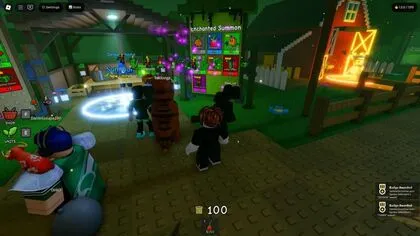
Nightmare Mode introduces Climate Shifts, which can change the environment from Drought (reduced fire rate) to Frost (reduced movement speed for plants). The "How-To" here is Environmental Adaptation. You must maintain a Hybrid Deck of plants. If you rely solely on Water-Based plants like Lily Pads and Cattails, a sudden Drought shift will render your entire defense useless within seconds.
To mitigate this, always keep a secondary line of Desert-Hardy plants like Aloe or Cactus in your inventory slots. When the climate shifts, you don't necessarily need to replace your entire garden, but you must Augment it. Placing a few Heat-Lamps can counteract a Frost shift, while Mist-Sprinklers can save your plants during a Drought. Mastery of these sub-mechanics is what defines the professional tier of players.
10. How to Perfect the Final Harvest Sell-Back Strategy
As the final boss approaches the end of the track, your early-game defenses at the start of the path become irrelevant. The "How-To" of the Final Harvest is the rapid selling and re-buying of units. Once the boss passes your front-line towers, they are dead weight. You must quickly sell them to recoup Sun, then instantly replant them at the very end of the track near your base.
This Leap-Frogging technique requires high Actions-Per-Minute (APM). You are essentially moving your entire army in real-time to follow the boss's progression through the garden. If done correctly, your highest-DPS units can engage the boss three or four times over the course of a single lap. This is often the only way to overcome the massive HP bars found in the game’s final challenges.
Mastering Roblox: Garden Tower Defense is an exercise in botanical warfare and economic foresight. By learning how to balance your root system, manage elemental convergences, and execute the high-speed Final Harvest, you move beyond the luck of the draw and into the realm of tactical certainty. The garden is a living organism; it requires constant pruning, feeding, and adaptation. If you treat your towers not as static objects, but as a dynamic, shifting front line, the garden's enemies will inevitably fall before your green thumb.