Children of Morta: How Corruption Fatigue Changes the Way You Play the Bergson Family
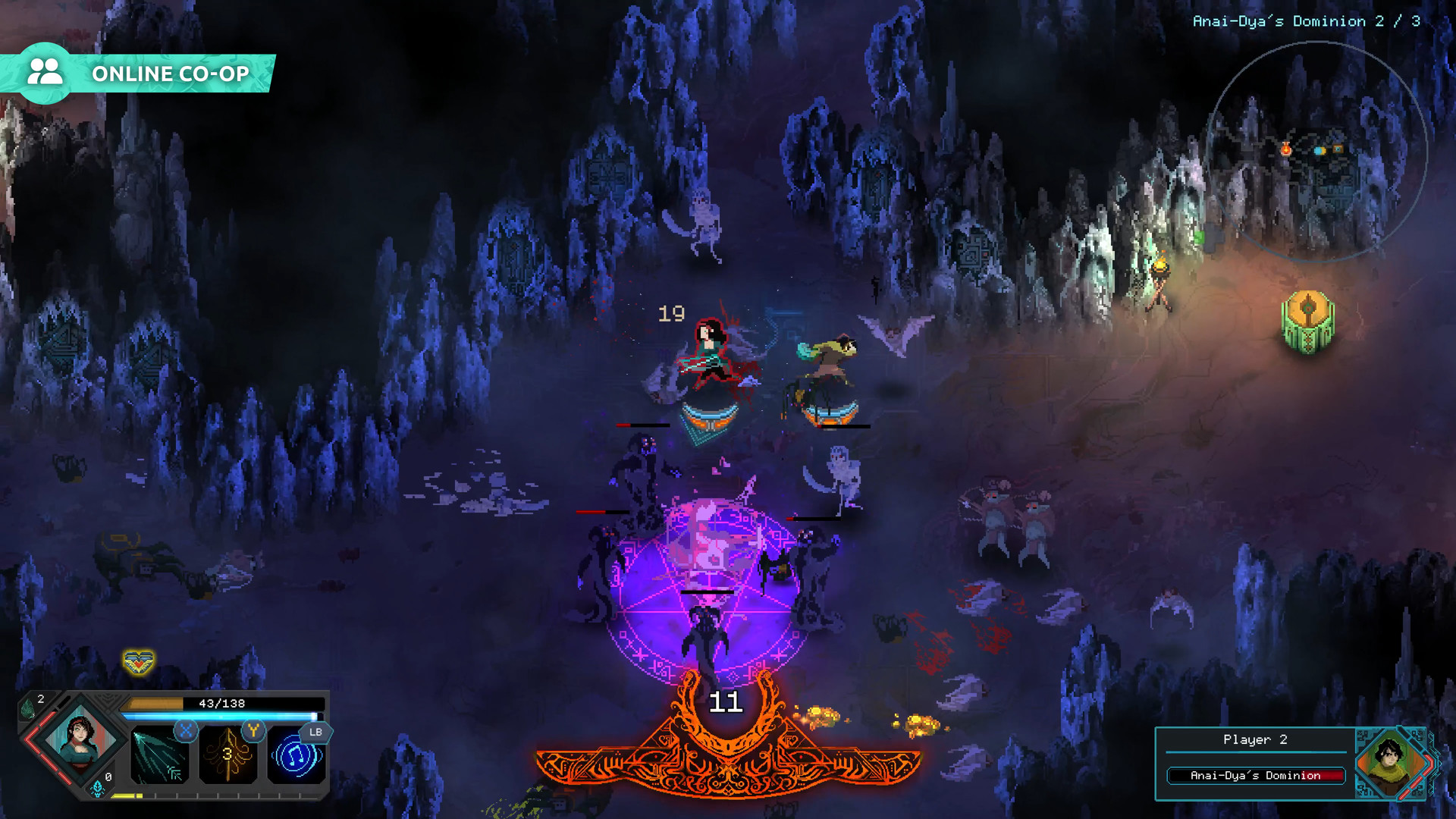
Children of Morta is built around a simple but surprisingly demanding idea: the Bergson family cannot rely on a single hero forever. At first, the game seems to encourage players to find a favorite character and master that character's abilities. Each member of the family has a different combat style, and discovering which one feels most natural can become an important part of the early experience. However, the longer a player depends on the same character, the more the game pushes back through Corruption Fatigue.
This mechanic is much more important than a conventional stamina penalty. It affects how players approach progression, character selection, dungeon runs, and even the meaning of failure. Instead of allowing the player to build one dominant character and ignore everyone else, Children of Morta turns the entire Bergson family into a connected progression system. A character who is powerful today may become less efficient after repeated use, while an underdeveloped family member can become the key to the next successful run.
The result is a distinctive gameplay cycle. The player enters the dungeon, fights through corrupted areas, earns resources and experience, returns home, evaluates the family's condition, and chooses who should fight next. The decision is not simply about which character is strongest. It is about which character is prepared, which one needs development, and which one can contribute to the family's long-term growth.
The First Runs Encourage Players to Choose a Favorite
During the opening hours, it is completely natural to develop a preference for one Bergson. John provides a relatively direct melee experience, with defensive tools that make him accessible to players who prefer fighting enemies at close range. Other characters eventually introduce different approaches, including ranged combat, rapid attacks, and more specialized abilities.
That difference is important because the characters are not simply visual alternatives. Their attack patterns and movement requirements can substantially change how a dungeon encounter is approached. A player who becomes comfortable with one character will naturally want to continue using that character because familiarity reduces the mental effort required during difficult encounters.
This creates a deliberate trap.
The most comfortable character is not necessarily the best character to use for every consecutive expedition. Children of Morta gradually introduces systems that make constant repetition less attractive. Instead of explicitly telling the player to stop using a favorite character, the game allows the consequences of repetition to teach that lesson.
Why players naturally repeat one character:
- Familiar attacks are easier to control.
- The player already understands the character's strengths.
- Existing upgrades make that character feel safer.
- Enemy encounters become easier to predict.
- Switching characters temporarily increases the learning curve.
This is precisely why the fatigue system matters. If changing characters were completely optional, many players would naturally settle into a preferred playstyle. Corruption Fatigue interferes with that habit and turns character rotation into part of the strategic layer.
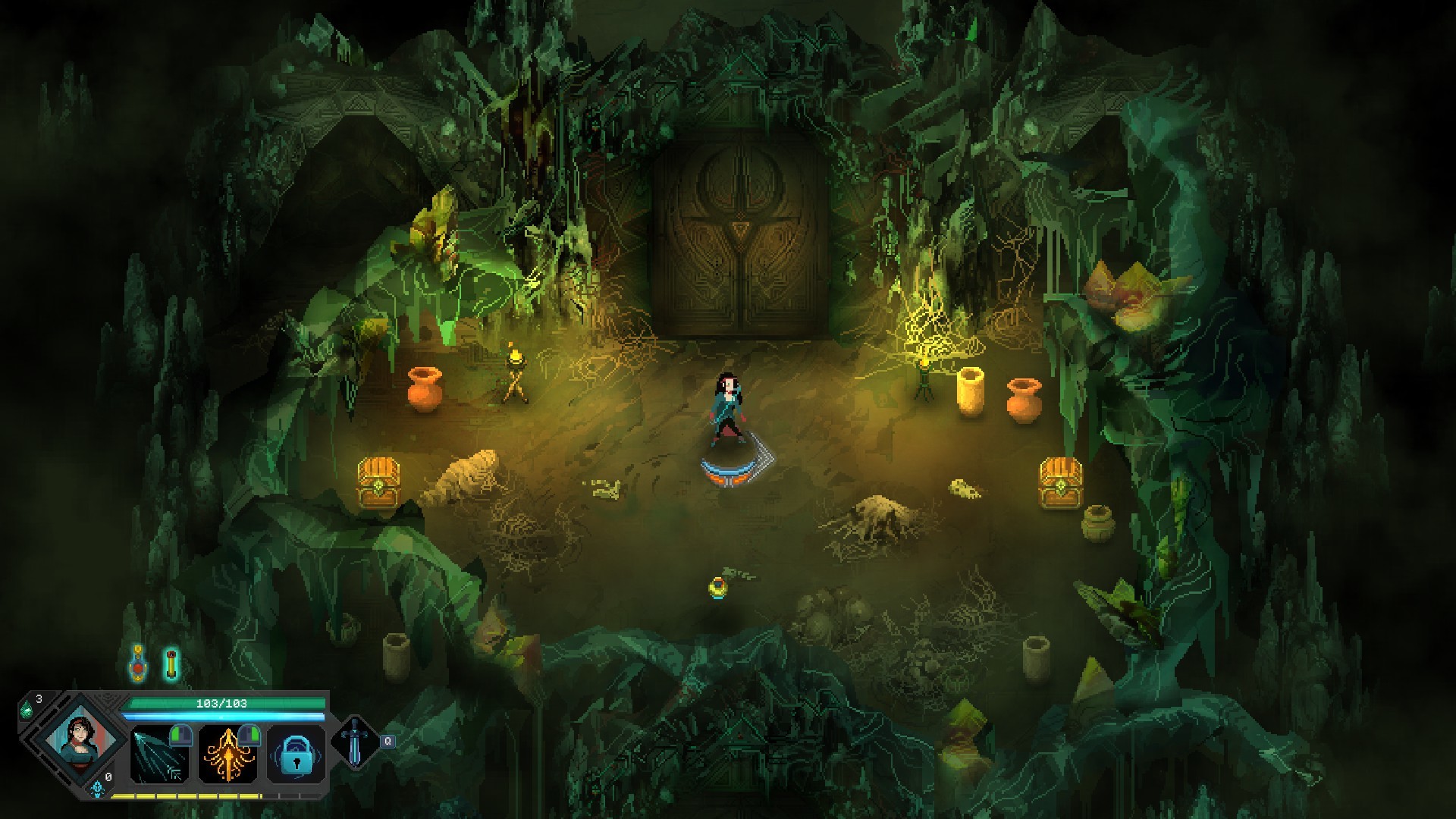
Corruption Fatigue Makes Repetition Expensive
Corruption Fatigue is the mechanic that changes the value of repeatedly using the same Bergson. After excessive use, a character can become fatigued, reducing survivability and making continued reliance on that character increasingly risky.
The important point is that fatigue does not completely prohibit the player from using a favorite character. The player still has the choice. However, the cost of that decision becomes increasingly visible when the character enters a dangerous dungeon with reduced effectiveness.
This creates a three-way calculation.
Familiarity favors the favorite character.
Fatigue favors switching.
Progression favors developing characters that have been used less frequently.
A player therefore has to consider more than immediate combat strength. Suppose a highly experienced character is fatigued while another family member is relatively fresh. The first character may still be mechanically stronger because the player knows the moveset better, but the second character can provide a healthier foundation for the next run.
This is where Children of Morta separates itself from a traditional action RPG. The player is not simply choosing the strongest available hero. The player is managing the condition of an entire roster.
The mechanic also changes how failure should be interpreted. If a fatigued character dies or fails to complete a run, the problem is not necessarily that the character is weak. The issue may be that the player continued using the same family member beyond the point where the system considered that choice efficient.
Returning Home Becomes a Strategic Decision
The Bergson home is one of the most important parts of the game's progression structure because it connects individual dungeon runs together. Returning home is not merely an interruption between combat sequences. It is the point where the player evaluates what happened during the previous expedition and decides how to approach the next one.
This becomes particularly important because Children of Morta preserves meaningful progression between runs. Resources, experience, character development, and permanent improvements can continue contributing to future attempts. A failed expedition therefore does not necessarily mean that the player has made no progress.
The home environment effectively becomes the family's strategic headquarters.
After returning from a dungeon, the player can consider questions such as:
- Which character has been used repeatedly?
- Which character is currently fatigued?
- Which family member needs additional experience?
- Which permanent upgrade should receive resources?
- Which character is most appropriate for the next attempt?
This creates a rhythm that is easy to overlook during the first few runs.
Dungeon → return home → evaluate the family → upgrade → rotate character → enter dungeon again.
That loop is fundamentally different from simply repeating the same hero through every attempt. The home transforms the campaign into a long-term family management process.
The player is therefore learning two systems simultaneously. Inside the dungeon, the player learns combat. At home, the player learns how to manage the family that will participate in future combat.
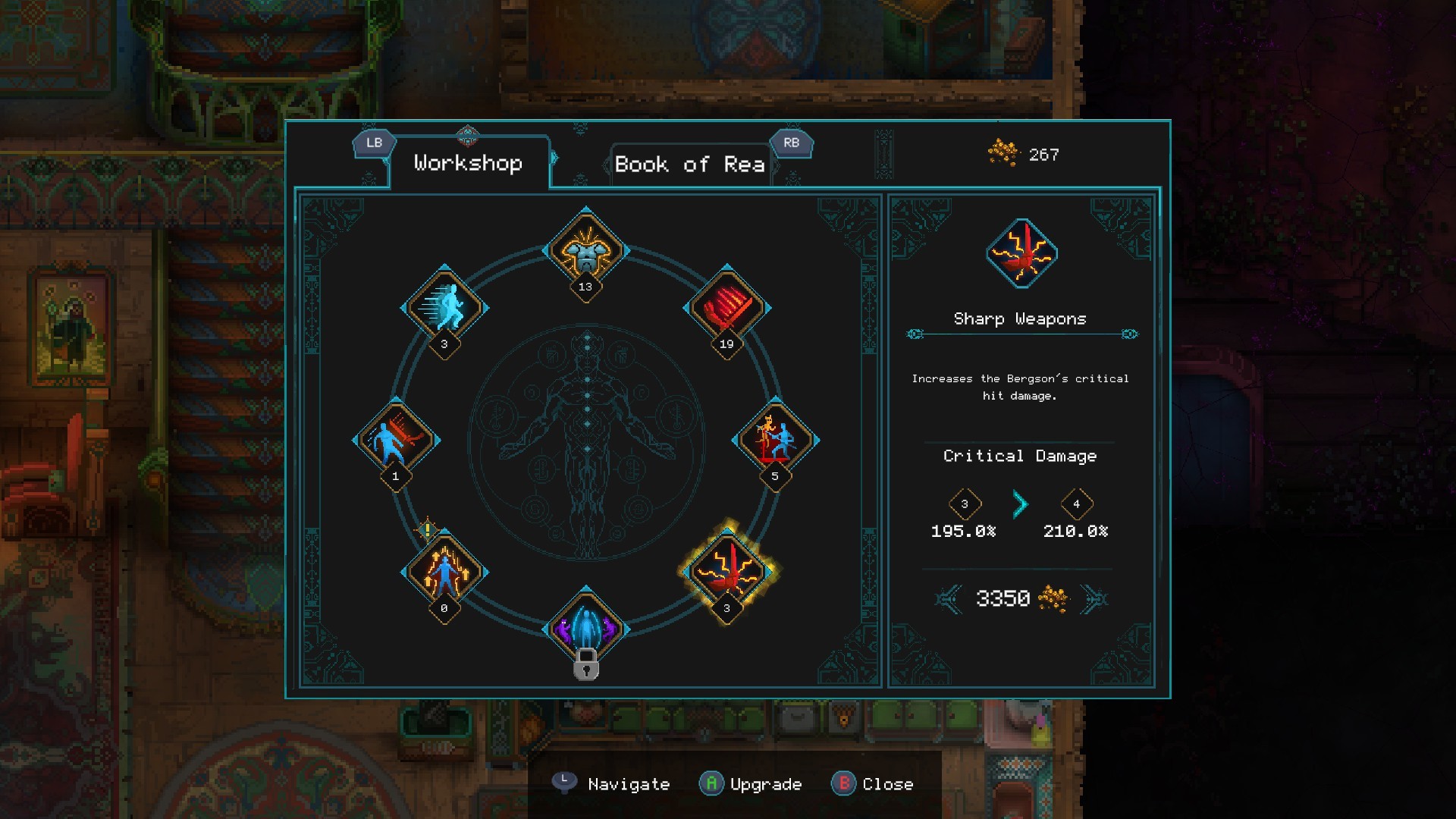
New Characters Expand the Rotation Instead of Replacing Old Ones
When another Bergson becomes available, the character does not simply provide another option on a selection screen. The new character expands the player's ability to respond to fatigue.
This is particularly important because every family member has a distinct combat identity. A character who depends on close-range aggression can approach a group of enemies very differently from a character who relies on distance. A defensive fighter can tolerate certain situations that would be much more dangerous for a fragile ranged character.
The result is that character rotation has both a mechanical and educational purpose.
When the player switches characters, they must learn:
- Attack range.
- Movement speed.
- Defensive options.
- Ability timing.
- Resource management.
- Positioning requirements.
- The character's preferred distance from enemies.
This learning process can initially feel like a disadvantage. However, it eventually gives the player a broader understanding of the game's combat system.
Instead of mastering only one character, the player begins to understand why particular enemy behaviors are dangerous regardless of which Bergson is being controlled.
That is a major change in skill development.
A player who only uses one character can become extremely proficient with that character's moveset. A player who rotates through the family begins developing something different: system-level knowledge.
They learn enemy patterns, dungeon layouts, attack timing, positioning, and risk management independently of one particular character.
Family-Wide Progression Makes Rotation Worthwhile
Character rotation would be frustrating if switching simply meant abandoning progress on the player's preferred hero. Children of Morta reduces that problem by connecting individual development to broader family progression.
This creates an important incentive. Even when a player is using a character they do not consider their favorite, that character's development can contribute to the overall strength of the Bergson family.
The distinction between individual progression and family progression therefore becomes extremely important.
Individual progression answers the question:
“How strong is this specific Bergson?”
Family progression answers a different question:
“How strong is the household as a whole?”
Those two questions are not always answered in the same way.
A player might have one exceptionally developed character but still benefit from investing time into another family member. The second character can gain experience, unlock abilities, and contribute to broader improvements. Over multiple runs, this makes the roster more balanced.
The system effectively transforms unused characters into future resources.
A neglected character is not simply a character sitting on the selection screen. That character represents potential progression that has not yet been collected.
This creates a useful long-term cycle:
- A favorite character becomes fatigued.
- The player switches to another family member.
- That character gains experience.
- The player learns a different combat style.
- The family gains additional progression.
- The original character eventually becomes useful again.
The cycle prevents the campaign from becoming completely dependent on a single character.
Character Rotation Forces a Different Kind of Combat Learning
The most interesting consequence of Corruption Fatigue is not simply that players change characters. It is that they are forced to reconsider what they think constitutes a safe combat decision.
Every character changes the player's relationship with distance and timing.
A melee character encourages the player to think about approaching enemies safely, recognizing attack animations, and creating opportunities to strike. A ranged character places greater emphasis on maintaining distance and controlling the battlefield. A faster character can create opportunities through mobility but may also encourage riskier positioning.
Changing characters therefore changes the player's interpretation of the same enemy.
An enemy projectile may be relatively easy to avoid when controlling a mobile character but more dangerous when the player is using a slower fighter.
A group of melee enemies may be manageable when the player has strong defensive tools but much more dangerous when the character depends on maintaining distance.
This creates an important distinction between character mastery and game mastery.
Character mastery means understanding one particular moveset extremely well.
Game mastery means understanding how enemies, environments, positioning, timing, and different character abilities interact.
Children of Morta's fatigue system pushes the player toward the second type of mastery.
That is why forced rotation can eventually become beneficial. The player stops thinking exclusively in terms of “my main character” and begins thinking in terms of “the right Bergson for this situation.”
The Family Theme Is Reflected Directly in the Mechanics
The narrative premise of Children of Morta centers on a family confronting corruption together. The gameplay system reinforces this idea in a surprisingly direct way.
The player may begin by thinking about individual heroes, but the progression system continually redirects attention toward the family as a whole.
One character cannot comfortably carry every expedition forever.
Another character eventually needs to step forward.
That character becomes stronger.
The family becomes more capable.
Then the original character can return later.
This cycle mirrors the broader idea of shared responsibility.
The significance of this connection is that the game does not need to constantly explain the theme through dialogue. The player experiences it mechanically.
The family is not merely a story concept.
The family is the progression system.
The family is the character roster.
The family is the long-term resource-management structure.
The player therefore begins to understand the Bergsons through repeated gameplay decisions rather than only through narrative scenes.
The system also makes individual sacrifice meaningful. When a player stops using a favorite character because of fatigue and allows another Bergson to take responsibility, the decision has a gameplay cost but contributes to the overall strength of the family.
This is exactly the kind of interaction between narrative and mechanics that makes the fatigue system more interesting than a standard cooldown.
Increasing Difficulty Makes Fatigue More Significant
At lower difficulty levels, a player may be able to ignore fatigue temporarily. Familiarity with a character can compensate for certain disadvantages, especially when the player has learned the basic enemy patterns.
As the game becomes more demanding, however, survivability becomes increasingly valuable.
A reduction in effective health can change how many mistakes a player can afford to make. A character who previously survived an additional attack may now be forced into a much more dangerous situation.
This makes fatigue increasingly relevant as the player's understanding of the game develops.
The player begins to recognize that continuing with a fatigued character is not necessarily wrong, but it is a deliberate risk.
A useful mental model is:
Fresh character + unfamiliar moveset = learning risk.
Fatigued character + familiar moveset = survival risk.
Fresh character + familiar moveset = ideal situation when available.
Fatigued character + unfamiliar moveset = generally the least comfortable combination.
This does not mean the player needs to follow a rigid rotation schedule. Instead, the player can use fatigue as information.
If one character is becoming less reliable, another member of the family can take the next expedition.
This makes the system flexible rather than purely restrictive.
Failure Becomes Part of Family Development
One of the strongest aspects of Children of Morta's progression is that failure does not necessarily mean wasted time. The player can return from an unsuccessful attempt with experience, resources, knowledge, and a better understanding of the family.
This is particularly important for character rotation.
If the game forced players to switch characters while simultaneously deleting all meaningful progress from unsuccessful runs, the mechanic could easily become frustrating. Instead, each attempt contributes to the larger progression structure.
A failed run can teach the player several things at once:
- Which enemy caused the most problems.
- Which character struggled in that situation.
- Which character handled the encounter better.
- Which upgrades would improve future attempts.
- Whether the current rotation strategy is working.
- Whether the player is relying too heavily on one family member.
This turns failure into information.
The player is not simply asking, “Why did I lose?”
The more useful question becomes:
“What did this run teach me about the family?”
That change in perspective is central to the game's roguelite structure.
A character who fails during one run may still have contributed valuable information. A different character may perform better against the same enemies. The family becomes stronger not only because of numerical upgrades but because the player understands its members more deeply.
The Final Lesson: The Family Is the Real Main Character
By the later stages of Children of Morta, the player's relationship with the roster can change dramatically.
At first, the player thinks in terms of favorite characters.
Later, the player thinks in terms of rotation.
Eventually, the player begins thinking about the Bergsons collectively.
That progression is the real achievement of Corruption Fatigue.
The mechanic does not merely punish excessive use of a character. It changes the player's definition of progression. A successful run is no longer simply a run in which the player's strongest character survives. It can also be a run in which another family member gains valuable experience, the household receives a useful improvement, or the player learns a new combat approach.
This makes the Bergson family function almost like one large RPG character composed of multiple smaller characters.
Each member has individual strengths.
Each member has individual weaknesses.
Each member can become fatigued.
Each member can develop.
But the final progression belongs to the family.
That is why Corruption Fatigue deserves to be examined as one of the most important systems in Children of Morta. Without it, the game's character roster could easily become a collection of optional playstyles. With it, the characters become interconnected parts of one strategic structure.
The mechanic also demonstrates why restrictions can sometimes create greater variety. By making repetition less efficient, the game creates a reason to experiment. By making family progression persistent, it gives experimentation a lasting reward. By connecting the system to the game's story, it gives that experimentation thematic meaning.
Conclusion
Children of Morta's Corruption Fatigue system is a carefully structured answer to one of the biggest problems in character-based roguelites: the tendency for players to discover one comfortable character and ignore the rest.
Instead of forcing variety through an arbitrary character-selection requirement, the game creates a gradual incentive to rotate. Repeated use makes a character less efficient, while switching provides opportunities to develop another member of the Bergson family. Because progression remains interconnected, the player never completely abandons the original character. They are simply redistributing attention across the family.
This creates a progression loop that connects combat, character development, permanent upgrades, failure, and narrative themes. The player starts by mastering individuals and eventually learns to manage the family as a whole.
The most important lesson is therefore simple: in Children of Morta, the strongest character is not always the most important character to use. The long-term objective is to build a family capable of sharing the burden of fighting corruption.